The Zurich Meeting
On June 4, 1975, two men sat across from each other in Zurich, Switzerland. One was Shimon Peres, then Israel's defense minister and a future Nobel Peace Prize laureate. The other was P.W. Botha, South Africa's minister of defense and a future architect of apartheid's final, most brutal decade. The subject of their meeting was not peace. It was nuclear weapons.[1]
Top-secret minutes from that meeting, declassified by the South African government decades later, reveal that Peres offered Botha Jericho missiles "in three sizes." The smallest was conventional. The largest was not. The minutes record that "Minister Botha expressed interest in a limited number of units of Chalet subject to the correct payload being available."[1] "Chalet" was the codename for the Jericho missile system. "The correct payload" has been widely interpreted by nuclear historians and journalists as referring to nuclear warheads.[2]
The documents appeared to confirm what analysts had long suspected: Israel and apartheid South Africa had reached an agreement to arm eight Jericho missiles with atomic bombs.[1]
"Minister Botha expressed interest in a limited number of units of Chalet subject to the correct payload being available."
The ISSA Pact and Its Consequences
The Zurich meeting was not an isolated event. It took place in the context of the Israel-South Africa Agreement (ISSA), a secret defense cooperation pact signed in April 1975.[2] Under this agreement, the two countries developed one of the most extensive clandestine military partnerships of the Cold War era.
The exchange was reciprocal, and each side provided what the other needed most. South Africa supplied Israel with yellowcake uranium, the raw material essential for nuclear fuel and weapons production. In return, Israel supplied South Africa with tritium, a radioactive isotope used to boost the yield of nuclear warheads.[3] Israel also provided avionics packages designed to enable aircraft to deliver nuclear bombs, along with radar systems, communications technology, and tank upgrades.[2]
The conventional arms trade was equally extensive. Israel sold South Africa six Reshef-class missile boats and more than 100 Gabriel anti-ship missiles.[2] Israeli specialists from the cancelled Lavi fighter jet program were later transferred to assist South African aircraft development programs.[4] By 1989, South Africa had tested both Jericho II and Shavit missiles, technologies with clear Israeli lineage.[3]
In 1977, the United Nations Security Council passed Resolution 418, imposing a mandatory arms embargo on South Africa. Israel became one of the principal nations to violate that embargo, continuing to supply the apartheid regime with weapons and military technology throughout the 1980s.[2]
The Vela Incident
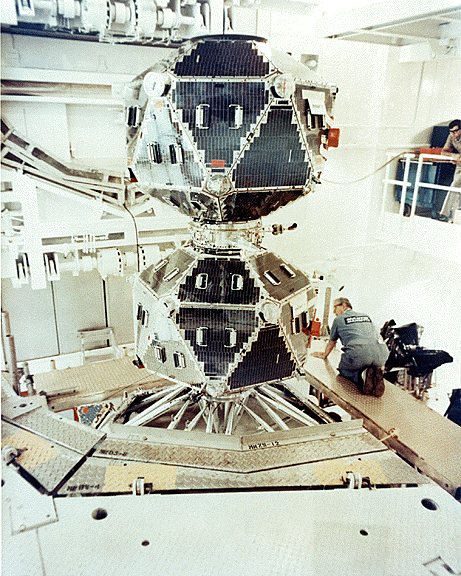
At 00:53 UTC on September 22, 1979, the American Vela 6911 satellite detected a distinctive double flash of light over the Southern Indian Ocean, between the Prince Edward Islands and the Crozet Islands. The signature was unmistakable to nuclear weapons analysts. Every one of the 41 previous double flashes detected by Vela satellites had been a confirmed nuclear detonation.[4]
The estimated yield was two to four kilotons, roughly a quarter the size of the bomb dropped on Hiroshima.[4] The location was remote, far from populated areas, and perfectly suited to a test that was meant to go unnoticed.
All 41 previous double flashes detected by Vela satellites had been confirmed nuclear detonations. The 42nd was never officially acknowledged.
President Jimmy Carter recorded his private assessment in his diary: "We have a growing belief among our scientists that the Israelis did indeed conduct a nuclear test explosion in the ocean near the southern end of Africa."[5] The Carter administration, however, never publicly confirmed this conclusion. Instead, it convened the Ruina Panel, which issued an ambiguous finding that the flash might have been caused by a meteoroid striking the satellite. Critics have accused the administration of a deliberate cover-up, motivated by the political impossibility of acknowledging that a close American ally had conducted an illegal nuclear test.[4]
The timeline is revealing. The International Atomic Energy Agency concluded in 1993 that South Africa could not have constructed a functional nuclear device until November 1979, a full two months after the September flash.[6] If the Vela detection was indeed a nuclear test (and the satellite's track record strongly suggests it was), South Africa could not have done it alone. The most likely partner, given the depth of the ISSA relationship and Israel's advanced nuclear capabilities, was Israel.
Leonard Weiss, a nuclear nonproliferation expert at Stanford University, put it plainly: "The weight of the evidence that the Vela event was an Israeli nuclear test assisted by South Africa appears overwhelming."[3]
Denial and Classification
Israel's official position has remained unchanged for decades. In 2010, after The Guardian published the declassified South African documents, the Israeli government issued a terse denial: "Israel has never negotiated the exchange of nuclear weapons with South Africa."[1] The statement did not address the specific contents of the declassified minutes, nor did it explain the documented references to "Chalet" and its "correct payload."
Israel maintains a policy of nuclear ambiguity, neither confirming nor denying the existence of its nuclear arsenal. This posture has allowed it to avoid the international inspections, sanctions, and treaty obligations imposed on declared nuclear states. The Vela incident fits neatly within this framework of strategic silence.
"The weight of the evidence that the Vela event was an Israeli nuclear test assisted by South Africa appears overwhelming." (Leonard Weiss, Stanford University)
Some information related to the Vela incident and the broader Israeli-South African nuclear relationship remains classified to this day.[6] The full scope of the partnership may never be known. But the declassified South African documents, combined with the physical evidence captured by an American satellite, establish a record that official denials have not erased.
What the Record Shows
The documentary evidence, assembled most comprehensively by scholar Sasha Polakow-Suransky in his 2010 book "The Unspoken Alliance," draws on South African government archives that survived the end of apartheid.[2] These are not allegations from anonymous sources or speculative analyses. They are official government minutes, signed agreements, and internal memoranda produced by the participants themselves.
The record shows that Israel offered nuclear weapons to a regime that was, at the time, an international pariah for its system of racial subjugation. It shows that the two countries exchanged nuclear materials, missile technology, and the technical expertise needed to deliver atomic weapons. And it shows that when a satellite detected what looked exactly like a nuclear test in a location consistent with their joint operations, the world's most powerful government chose not to investigate further.
The facts are in the documents. The flash was in the sky. The silence is a matter of policy.
Sources
- [1] The Guardian - South African documents — https://www.theguardian.com/world/2010/may/23/israel-south-africa-nuclear-weapons
- [2] Democracy Now - Polakow-Suransky interview — https://www.democracynow.org/2010/5/25/israel
- [3] Bulletin of Atomic Scientists - Flash from the past — https://thebulletin.org/2015/09/flash-from-the-past-why-an-apparent-israeli-nuclear-test-in-1979-matters-today/
- [4] Foreign Policy - Blast from the Past — https://foreignpolicy.com/2019/09/22/blast-from-the-past-vela-satellite-israel-nuclear-double-flash-1979-ptbt-south-atlantic-south-africa/
- [5] National Security Archive - Vela Flash — https://nsarchive.gwu.edu/briefing-book/nuclear-vault/2019-09-22/vela-flash-forty-years-ago
- [6] Wilson Center - Revisiting Vela Mystery — https://www.wilsoncenter.org/blog-post/revisiting-1979-vela-mystery-report-critical-oral-history-conference
- [7] Al Jazeera - Israeli nuclear offer to S. Africa — https://www.aljazeera.com/news/2010/5/25/israeli-nuclear-offer-to-s-africa