A Doctrine Designed for Soldiers, Turned on Civilians
The Hannibal Directive was born in 1986, developed by three senior IDF Northern Command officers as a classified protocol for a narrow scenario: preventing the capture of Israeli soldiers by enemy forces.[1] The logic was brutal but internally coherent. A captured soldier becomes leverage. Leverage becomes concessions. Concessions become precedent. So the directive authorized lethal force to stop a kidnapping in progress, "even at the price of striking and harming our own forces."[5] For three decades, that calculus applied exclusively to combatants who had, at least in theory, accepted the risks of service.
The IDF officially revoked the directive in 2016 under Chief of Staff Gadi Eisenkot.[5] It was supposed to be dead policy. On October 7, 2023, it came back; and this time, its scope had expanded beyond anything its architects envisioned.
The Haaretz Investigation
On July 7, 2024, Haaretz published an investigation that should have detonated like a bomb in Israeli public discourse.[1] The report revealed that on October 7, the IDF issued a sweeping Hannibal Directive order to the Gaza Division. The command was unambiguous: "Not a single vehicle can return to Gaza."[1] This order was given with full knowledge that Hamas fighters were transporting Israeli civilians (not soldiers) back across the border. The directive, historically reserved for preventing the capture of military personnel, was applied to a situation involving hundreds of civilian hostages.
"Not a single vehicle can return to Gaza." The IDF issued this order knowing Israeli civilians were inside those vehicles.
The implications are staggering. Israeli forces were ordered to fire on vehicles carrying their own citizens. The objective was not rescue. It was denial: deny Hamas the leverage of living hostages, regardless of the cost to those hostages themselves. In February 2025, former Defense Minister Yoav Gallant confirmed in a Channel 12 interview that the Hannibal Directive had indeed been used during the conflict.[5]
Be'eri: The Case That Won't Go Away
The kibbutz of Be'eri has become the sharpest point of this controversy. During the October 7 attack, Hamas fighters took over the home of Pessi Cohen, holding 14 hostages inside, including 12-year-old twins.[7] An Israeli tank fired two shells directly at the house.[7] Thirteen of the fourteen hostages were killed. Only two people survived.
One of those survivors, Yasmin Porat, gave testimony to Kan radio that directly contradicts the official Israeli narrative. Porat stated that the Hamas gunmen had not threatened the hostages and intended to negotiate.[7] She said the gun battle began when an Israeli police special unit opened fire on the house.[7]
Yasmin Porat, a survivor of Be'eri, told Israeli radio that Hamas fighters had not threatened hostages and intended to negotiate. Israeli forces opened fire first.
In July 2024, the IDF investigated its own conduct at Be'eri and cleared itself of wrongdoing.[7] No independent investigation has been permitted. No external body has been granted access to the evidence. The military examined its own actions and found them acceptable.
The ICJ and the Question of Genocide
South Africa filed its genocide case against Israel at the International Court of Justice on December 29, 2023.[2] On January 26, 2024, the Court found it "plausible" that Palestinian rights under the Genocide Convention were being violated and ordered six provisional measures in near-unanimous votes (15 to 2).[6] On March 28, 2024, the Court ordered Israel to ensure the delivery of food supplies to Gaza.[6] On May 24, 2024, it ordered Israel to halt its Rafah offensive by a vote of 13 to 2.[6] Israel rejected the order and pressed forward with the operation.
South Africa's memorial to the Court spans over 750 pages of text, supported by more than 4,000 pages of exhibits.[2] The case remains active, and its breadth continues to grow as the conflict stretches into its second year.
The Numbers Behind the Rhetoric
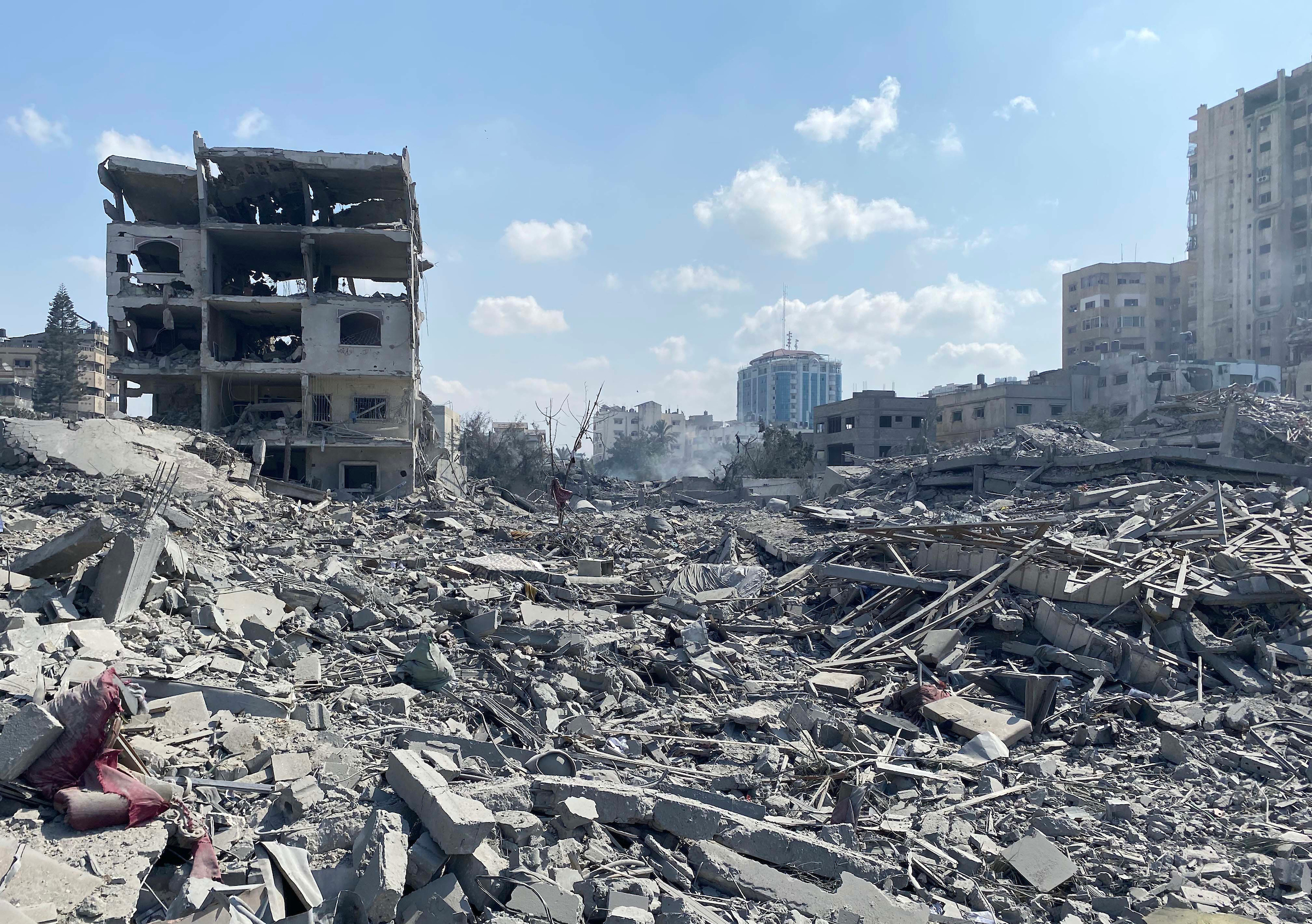
By December 2025, the official death toll in Gaza had reached at least 70,117.[3] A July 2024 correspondence published in The Lancet estimated that the true number of deaths attributable to the conflict could reach as high as 186,000, accounting for indirect mortality from infrastructure collapse, disease, and starvation.[3] Approximately 90% of Gaza's civilian infrastructure has been destroyed.[8] Only 12 of Gaza's 36 hospitals remained capable of providing care by May 2025.[8] The IPC declared famine in northern Gaza. Nearly all 2.3 million Palestinians in the territory have been forcibly displaced at least once.
The war has also been the deadliest conflict for journalists in recorded history. The Committee to Protect Journalists documented nearly 250 journalists killed since hostilities began.[4] The destruction of the press corps is not incidental; it is structural. Without journalists, there are no witnesses. Without witnesses, there is no accountability.
The Committee to Protect Journalists has documented nearly 250 journalist deaths, making this the deadliest conflict for the press in recorded history.
What the Record Shows
The Hannibal Directive was supposed to be a relic. Instead, it was resurrected, expanded, and applied to civilians. The IDF investigated itself at Be'eri and found no fault. The ICJ issued binding provisional measures that Israel ignored. The death toll, by conservative estimates, has surpassed 70,000; by credible epidemiological projections, it may exceed 186,000.
These are not allegations from hostile foreign governments. The Haaretz investigation was conducted by Israeli journalists. Yasmin Porat gave her testimony to Israeli radio. Yoav Gallant confirmed the directive's use on Israeli television. The ICJ's provisional measures were supported by judges from across the globe, including those from Western allied nations.
The factual record is extensive, documented, and growing. The question is no longer what happened. It is whether any institution with enforcement power will act on what is already known.
Sources
- [1] Haaretz - IDF Ordered Hannibal Directive on October 7 — https://www.haaretz.com/israel-news/2024-07-07/ty-article-magazine/.premium/idf-ordered-hannibal-directive-on-october-7-to-prevent-hamas-taking-soldiers-captive/00000190-89a2-d776-a3b1-fdbe45520000
- [2] ICJ - Case Concerning Application of the Convention on the Prevention and Punishment of the Crime of Genocide — https://www.icj-cij.org/case/192
- [3] The Lancet - Counting the Dead in Gaza — https://www.thelancet.com/journals/lancet/article/PIIS0140-6736(24)01169-3/fulltext
- [4] CPJ - Journalist Casualties in the Israel-Gaza War — https://cpj.org/2025/12/press-killings-in-2025-equal-record-high-of-126-killed-in-2024/
- [5] Al Jazeera - Israeli Army Used Hannibal Directive During October 7 Attack — https://www.aljazeera.com/news/2024/7/7/israeli-army-used-hannibal-directive-during-october-7-hamas-attack-report
- [6] ICJ - Provisional Measures Order — https://www.icj-cij.org/node/203454
- [7] Haaretz - IDF Investigation Into Be'eri Battles — https://www.haaretz.com/israel-news/2024-07-10/ty-article/.premium/israeli-military-finds-serious-flaws-in-troops-conduct-during-beeri-battles-on-october-7/00000190-9965-d3c0-a7b0-f96587ec0000
- [8] WHO - Six Months of War Leave Al-Shifa Hospital in Ruins — https://www.who.int/news/item/06-04-2024-six-months-of-war-leave-al-shifa-hospital-in-ruins--who-mission-reports